
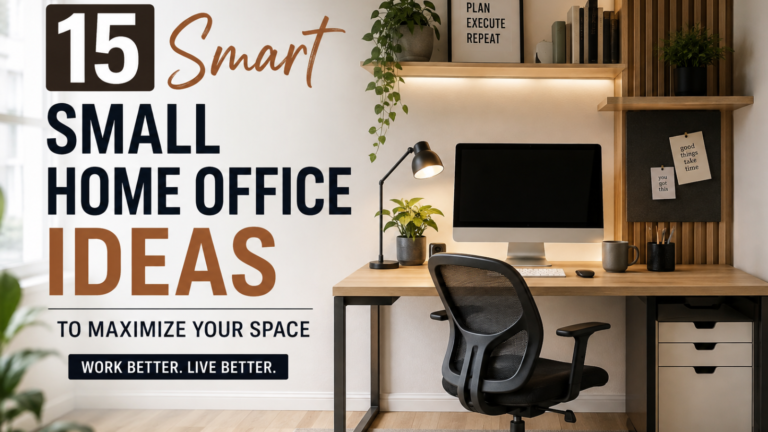
Small home office ideas can help you make better use of limited space without making your workspace feel cramped.
You don’t need a separate room to create a home office you actually enjoy working in.
A small corner of your bedroom, an unused wall in the living room, or even a narrow space beside a closet can become a comfortable workspace with the right setup.
The trick is not trying to squeeze more furniture into the room. It’s about making better use of the space you already have.
A desk that’s too deep can make the room feel cramped. Too much storage can quickly turn into clutter. And a workspace without good lighting or cable management can become frustrating surprisingly fast.
If you’re working with limited space, these small office ideas can help you create a setup that feels organized, comfortable, and intentional.
Disclosure: Workspacio HQ participates in the Amazon Services LLC Associates Program. Some links in this article are affiliate links, which means we may earn a commission from qualifying purchases at no additional cost to you.
Before You Buy Anything, Measure Your Space
This is one step that’s easy to skip—and one of the easiest ways to end up with furniture that doesn’t fit.
Before buying a desk or chair, measure the area where you plan to build your office. Pay attention to more than just the width of the wall.
- Available width and depth: A desk might fit across the wall but still stick too far into the room.
- Door and window placement: Make sure furniture won’t interfere with doors or block natural light.
- Electrical outlets: Think about where your computer, lamp, monitor, and other devices will need power.
- Chair clearance: Leave enough room to pull your chair back and move comfortably.
- Wall height: Vertical space can become valuable storage in a small office.
For example, if you have a 40-inch-wide space, a 42-inch desk obviously isn’t going to work. A quick measurement before shopping can save you from a frustrating return later.15 Home Office Essentials for Maximum Productivity
1. Start With a Desk That Fits
The desk is usually the biggest piece of furniture in a small office, so getting this choice right can make a big difference.
Don’t focus only on the desk’s width. Depth matters just as much. A desk that’s too deep can take away valuable walking space, even if it fits perfectly against the wall.
For a straightforward small-office setup, the Sweetcrispy 40-Inch Computer Desk with Drawers is one option worth considering. Its compact footprint and built-in drawers give you both a work surface and some storage without needing another cabinet.
Why it works well in a small office:
- 40-inch width works well in many compact spaces
- Built-in drawers provide convenient storage
- Keeps frequently used supplies close to your workspace
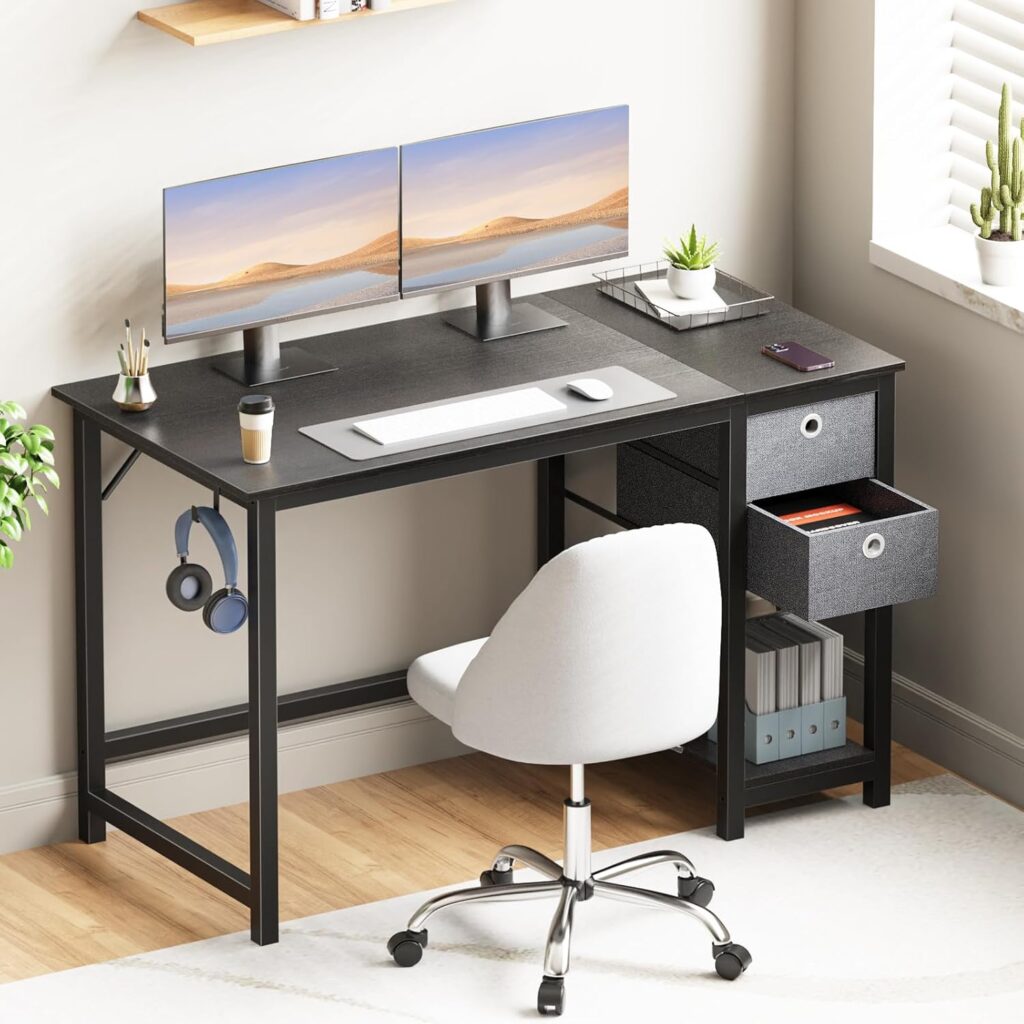
Best for: Anyone looking for a simple desk that combines workspace and basic storage.
View Desk on Amazon →If you prefer a wood-focused design, the VIZBMYR Widen Solid Wood Desk with Drawers is another option to consider. It gives you the same basic idea—workspace plus built-in storage—but with a solid wood construction.
VIZBMYR Widen Solid Wood Desk with Drawers
Best for: Anyone who prefers a solid wood desk with built-in storage.
View Desk on Amazon →2. Try a Wall-Mounted Desk
When floor space is limited, look at your walls.
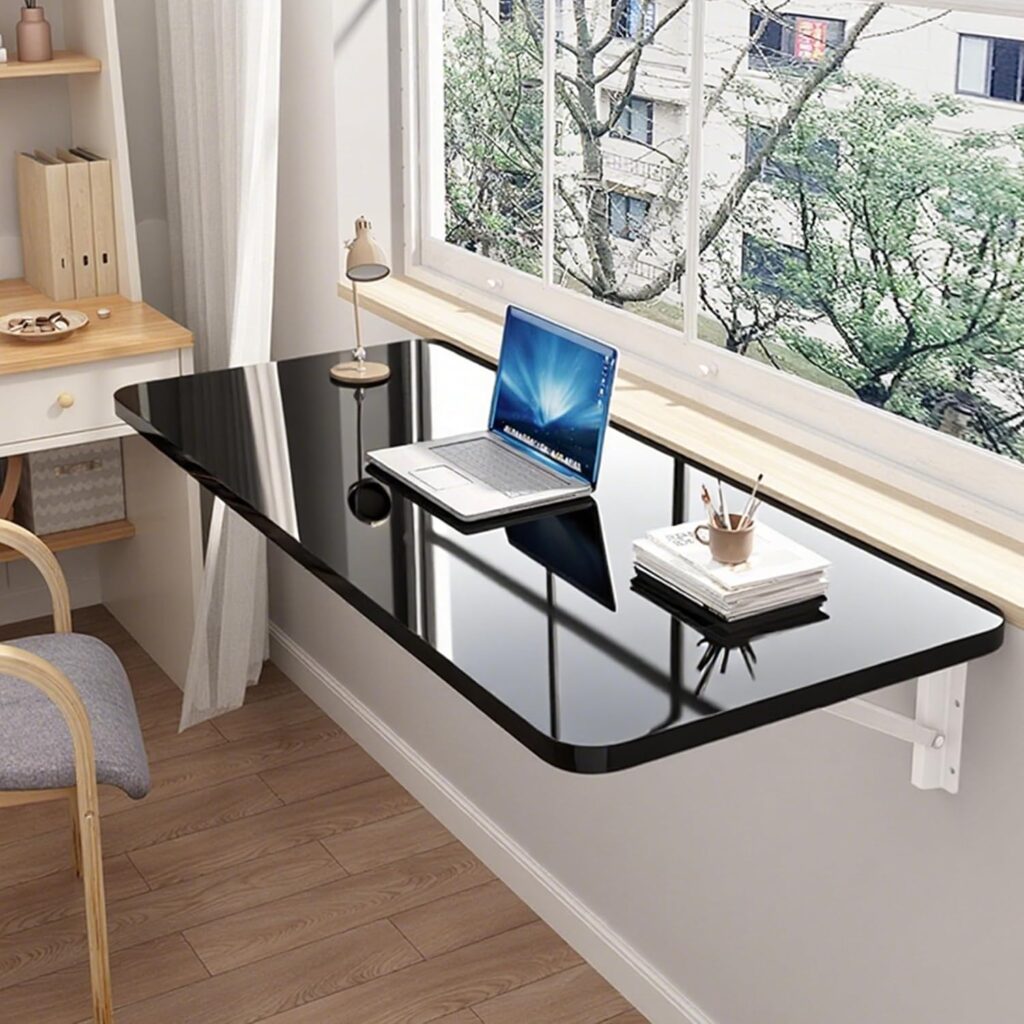
A wall-mounted desk can be a smart solution because it doesn’t require traditional desk legs taking up space underneath. Some models can also fold away when you’re finished working.
The SKVSKV Wall Mounted Folding Table is designed around this idea. It mounts to the wall and folds up when you don’t need the work surface.
SKVSKV Wall Mounted Folding Table
This can be particularly useful in a narrow room, hallway nook, or multipurpose space.
Why it works well in a small office
- No desk legs taking up floor space
- Folds away when you need the room for something else
- Works especially well in narrow or multipurpose spaces
Best for: Anyone working with very limited floor space or a room that serves multiple purposes.
3. Use a Folding Desk in a Multipurpose Room
Maybe your office is also your guest room. Or perhaps your living room needs to serve several purposes throughout the day.
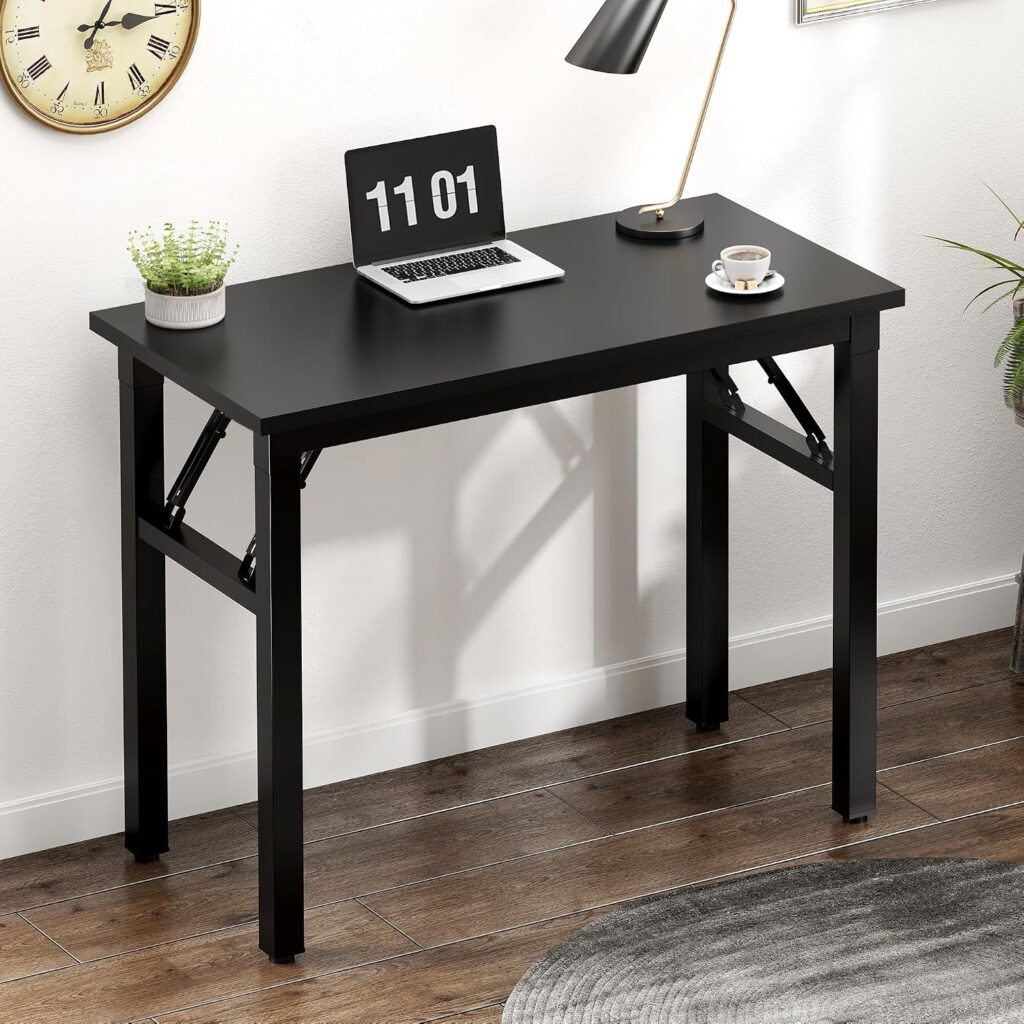
In that situation, a folding desk can make a lot of sense. Instead of dedicating permanent floor space to a workstation, you can set it up when you need it and fold it away afterward.
The Need 31.5 Inch Folding Desk is a compact option for this type of setup. Its smaller surface makes it better suited to laptop work than a large dual-monitor workstation, but that’s also what allows it to work in tighter spaces.
Keep in mind: The smaller surface is better suited to a laptop setup than a full dual-monitor workstation.
Best for: Anyone who needs a workspace that can be folded away when the room needs to serve another purpose.
4. Move Storage Off the Floor
In a small office, floor space is often the first thing that disappears. Instead of adding another cabinet or storage unit, look for ways to use the walls.
Floating shelves can hold books and office supplies without taking up floor space. A pegboard can keep smaller items organized and within reach, while wall organizers can replace some of the storage you’d normally need on the floor.
But don’t feel like you need to cover every available wall. The goal is simply to move some of the clutter up and away from your desk, leaving your workspace easier to use.
5. Choose a Comfortable Chair That Doesn’t Take Over the Room
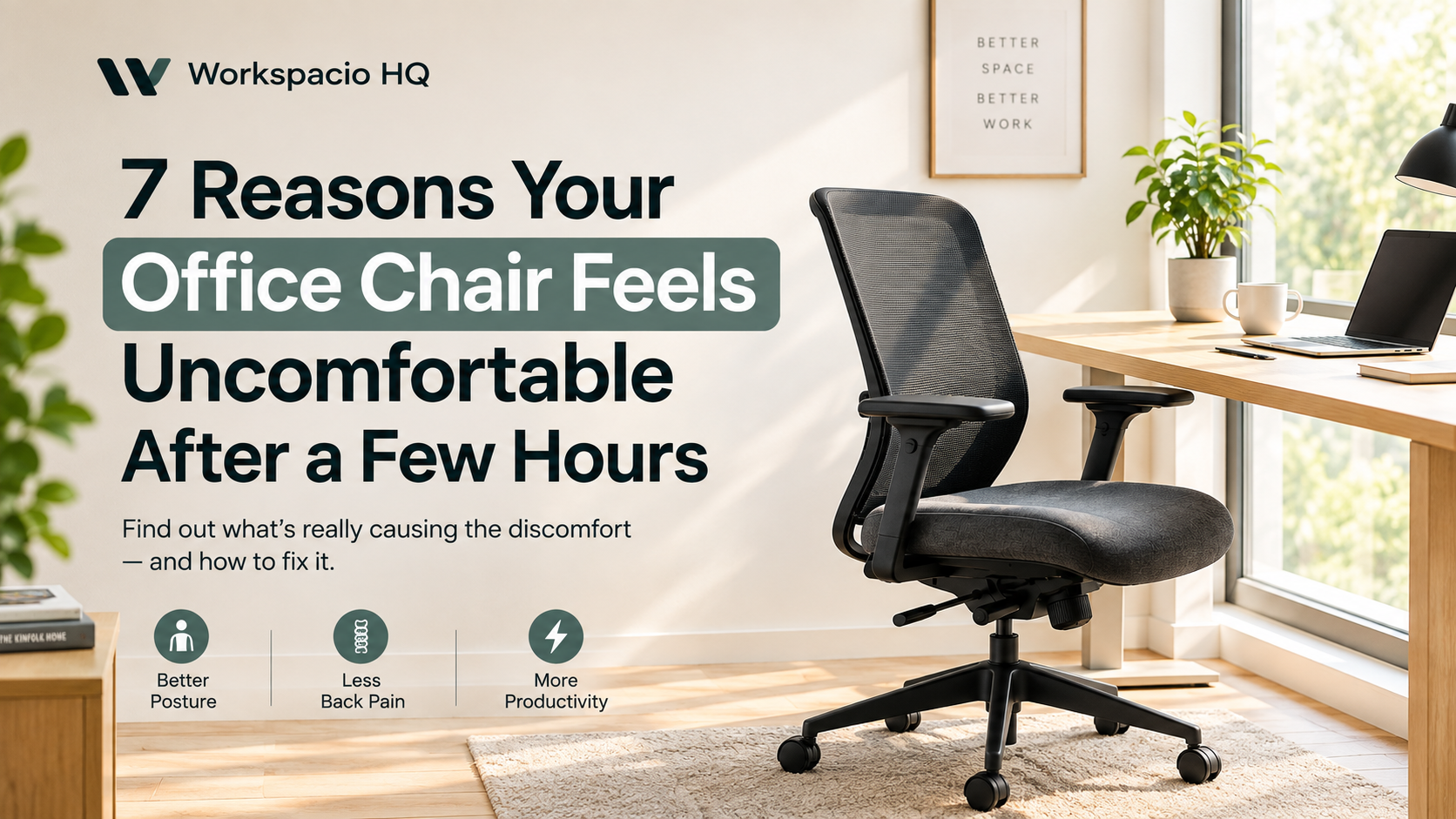
A small office doesn’t mean you need an uncomfortable chair. If you’re going to spend several hours working at your desk, comfort should still be a priority. The key is finding a chair that gives you the support you need without taking over the room.
Look for a comfortable seat height, good lower-back support, armrests that don’t interfere with your desk, and a base that fits comfortably in your available space. It should also slide under the desk when you’re not using it.
An oversized executive chair might look impressive, but it can quickly overwhelm a small workspace. A simpler ergonomic chair with a compact footprint may actually work better.
6. Save Desk Space With Better Lighting
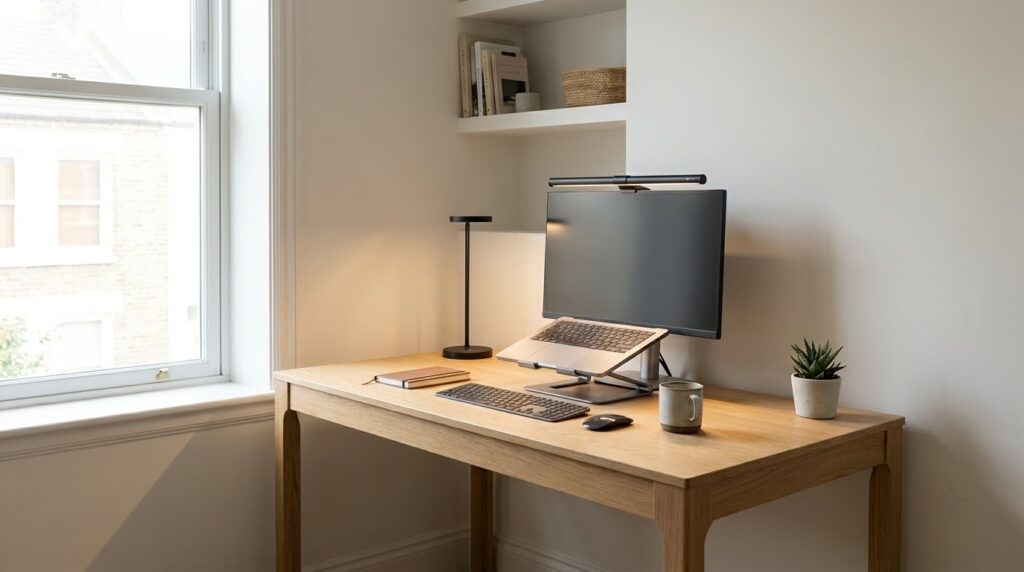
Lighting doesn’t have to take up half your desk. A traditional lamp with a large base can quickly eat into your available workspace, especially when your desk is already small.
Instead, consider a slim desk lamp or a monitor light bar. A monitor light bar sits on top of your screen and directs light onto your desk without using valuable desktop space.
Natural light can help too. If possible, place your desk perpendicular to a window rather than directly facing it. This can reduce annoying reflections on your monitor while still giving you plenty of daylight.
7. Free Up Desk Space With a Monitor Arm
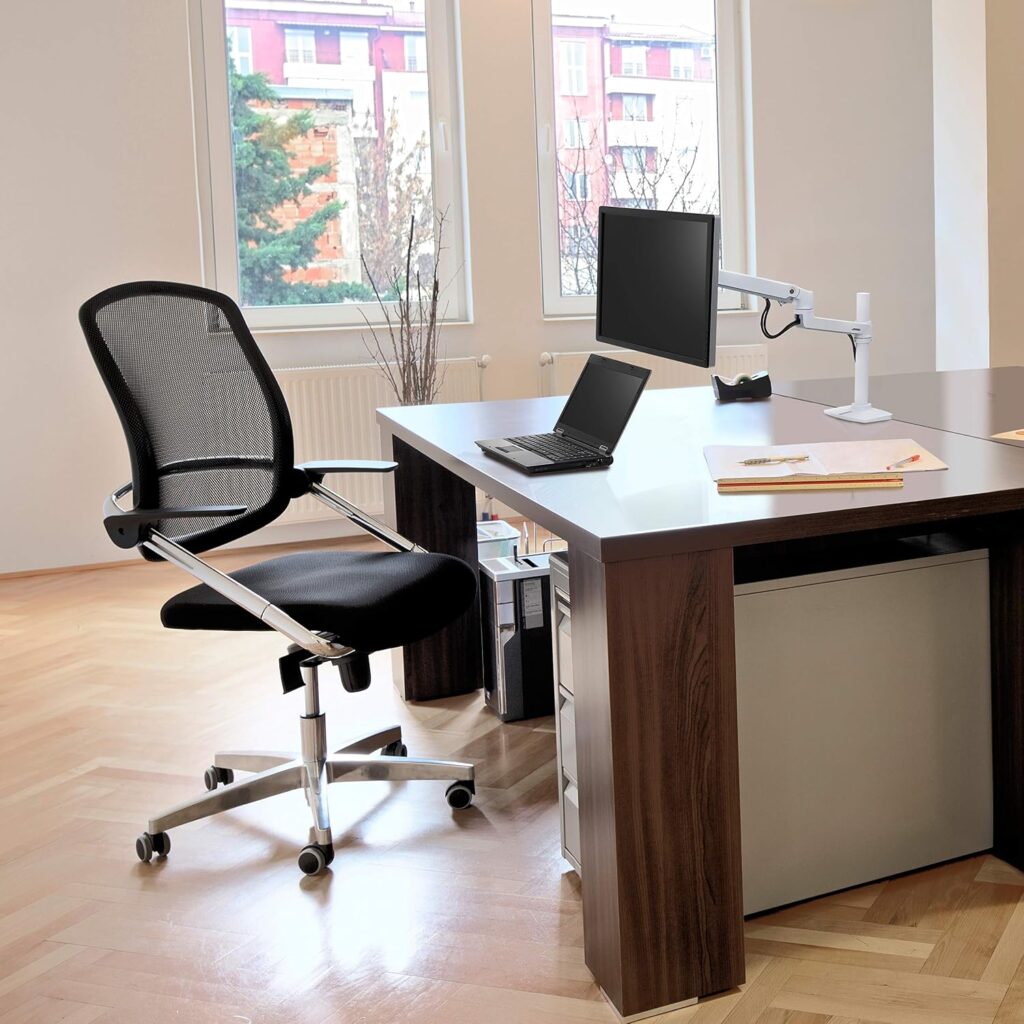
If your monitor sits directly on the desk, its stand can take up more space than you realize. A monitor arm moves the screen off the desktop and gives you back some room for your keyboard, notebook, or other essentials.
It can also make it easier to adjust your screen to a comfortable viewing height and angle.
The Ergotron LX Single Monitor Arm is a premium option for a single-monitor setup. It lifts your screen off the desk, giving you more usable space for your keyboard, notebook, and other essentials. Its adjustable design also makes it easier to position your monitor at a comfortable viewing height.
Why it works well in a small office
- Frees up valuable desk space by lifting the monitor off the surface
- Lets you adjust the monitor to a more comfortable position
- Can be folded or moved aside when you need more workspace
Best for: Anyone who wants a cleaner desk and a more flexible monitor setup.
8. Raise Your Laptop With a Stand
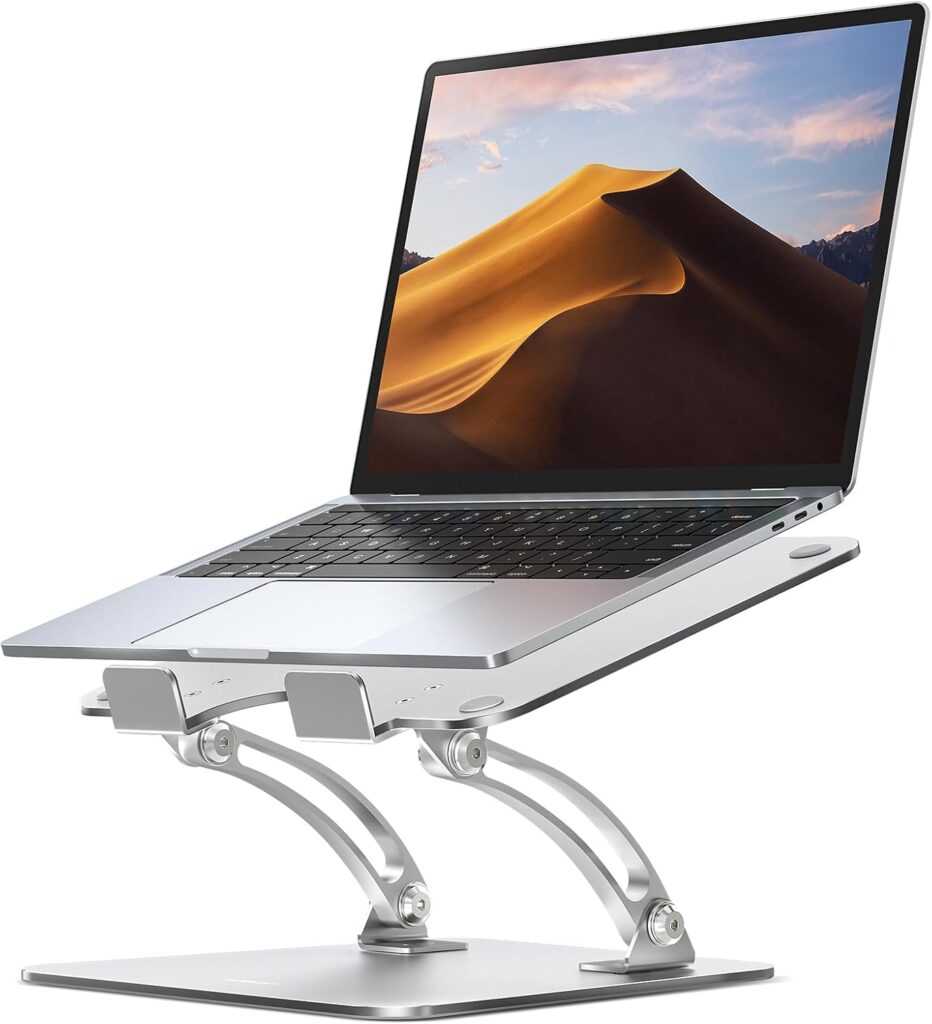
If you work from a laptop, raising the screen can make your setup much more comfortable without taking up much extra space. A laptop stand lifts the display closer to eye level, which can help you maintain a more natural posture while working.
Look for a stand with a stable base and enough height adjustment for your setup. If you’re using an external keyboard and mouse, you can keep the laptop elevated while using the larger part of your desk for other essentials.
If you want a simple way to raise your laptop without adding a bulky piece of furniture, the Nulaxy Ergonomic Adjustable Laptop Stand for Desk is worth considering. Its adjustable design lets you raise and tilt the laptop to find a more comfortable viewing position while keeping the footprint relatively small.
Best for: Anyone who works primarily from a laptop and wants a more comfortable viewing height without taking up much desk space.
9. Keep Cables Under Control
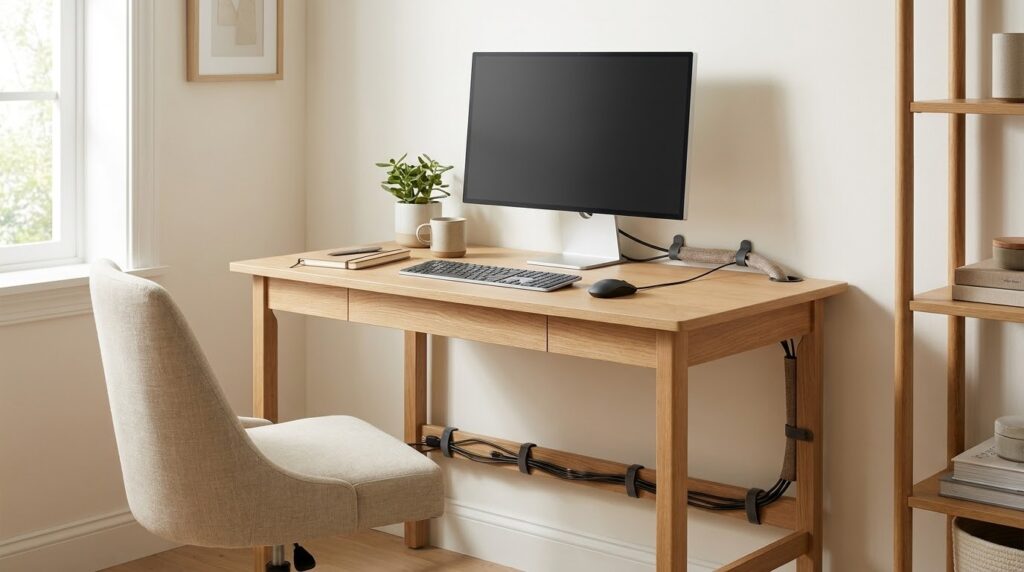
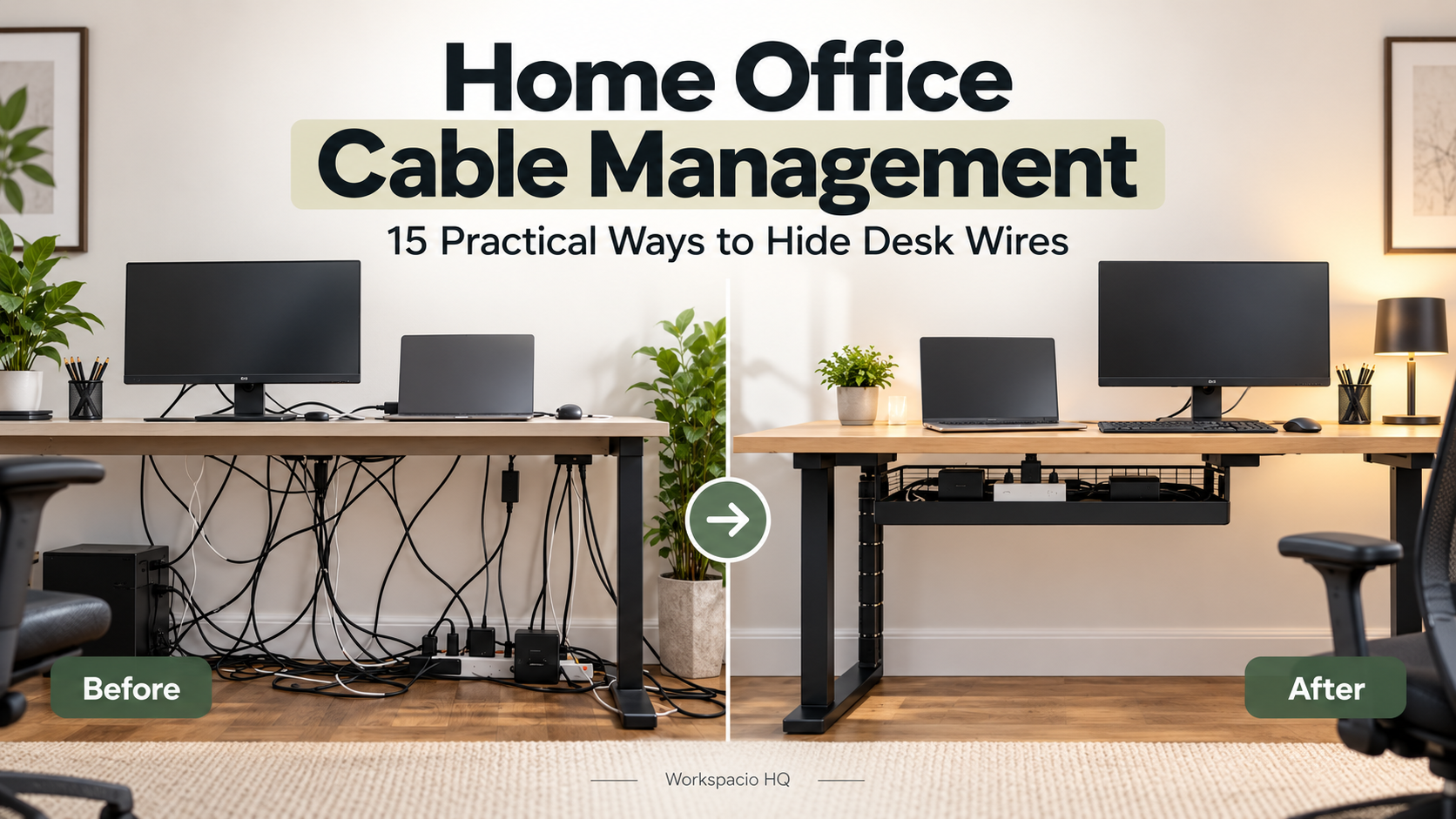
A clean desk can still feel messy when cables are running everywhere. Chargers, monitor cables, and power cords can quickly make a small workspace look more cluttered than it actually is.
Start by routing cables toward the back of the desk and grouping cords that belong together. Use simple clips, sleeves, or ties to keep them from hanging across your workspace.
You don’t need a complicated cable-management system. Even a few well-placed cable clips can make a noticeable difference and keep the area around your feet clear.
10. Choose Furniture That Does More Than One Job
When every square foot matters, it’s worth choosing furniture that can serve more than one purpose. A desk with built-in storage, a shelf that doubles as a display area, or a compact cabinet that can also hold office supplies can help you get more from a small room.
The goal isn’t to fill the room with multifunctional furniture. Instead, choose one or two pieces that solve a real problem and help reduce the amount of furniture you need.
Before buying anything, ask yourself what problem the piece actually solves. If it can replace two separate items without making your workspace feel crowded, it’s probably worth considering.
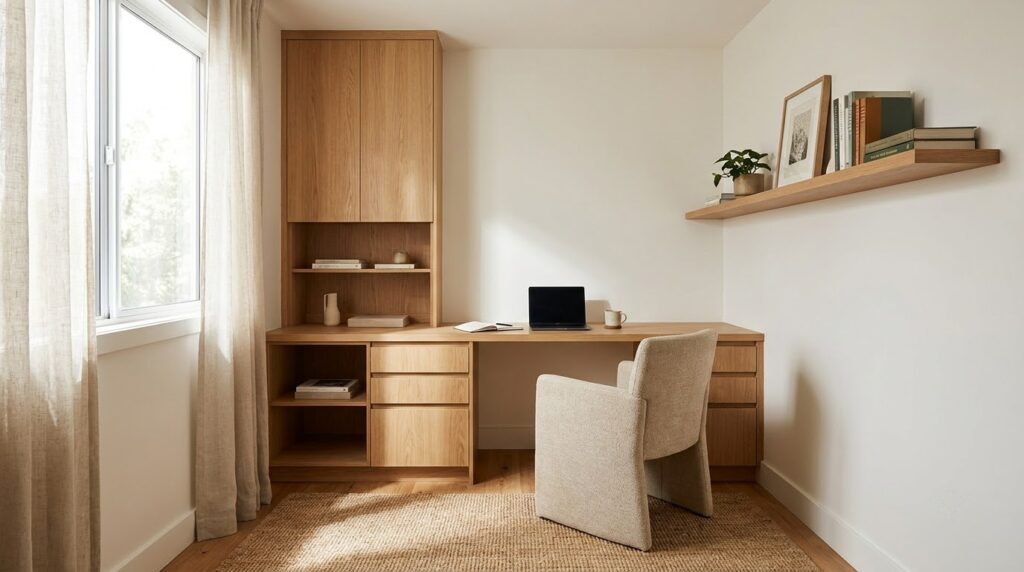
11. Keep Furniture Visually Light
In a small room, bulky furniture can make the entire space feel smaller. Pieces with lighter visual profiles—such as open shelving, slim legs, and simple frames—can help the room feel less crowded without sacrificing function.
Light-colored furniture can also make a difference, especially when it works with the rest of the room. You don’t have to make everything white; natural wood, soft neutrals, and other lighter finishes can create a more open feel.
When choosing furniture, look beyond its dimensions. Pay attention to how much visual space it occupies. A piece with a simple, open design can feel much less imposing than a bulky piece of the same size.
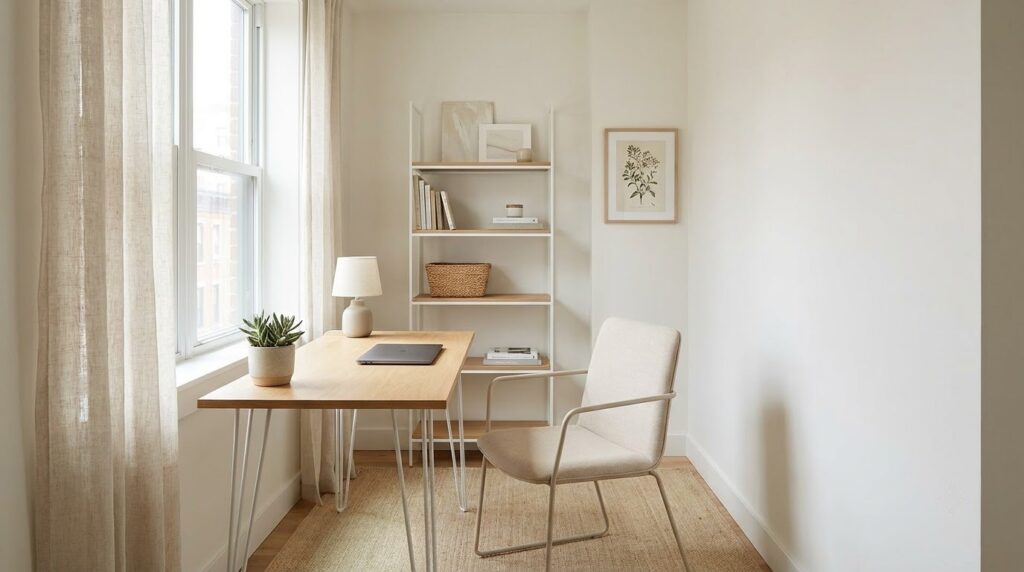
12. Create a Dedicated Productivity Zone
You don’t need a separate room to create a home office. Even a small corner can become a dedicated productivity zone if you give it a clear purpose.
Try placing your desk against an open wall or in an unused corner and keeping the area around it focused on work. A consistent setup can make it easier to switch into work mode, even when the rest of the room has other uses.
Keep the area simple. A desk, comfortable chair, good lighting, and the essentials you use every day may be all you need. The less visual clutter around your workspace, the easier it is to keep the zone feeling intentional.
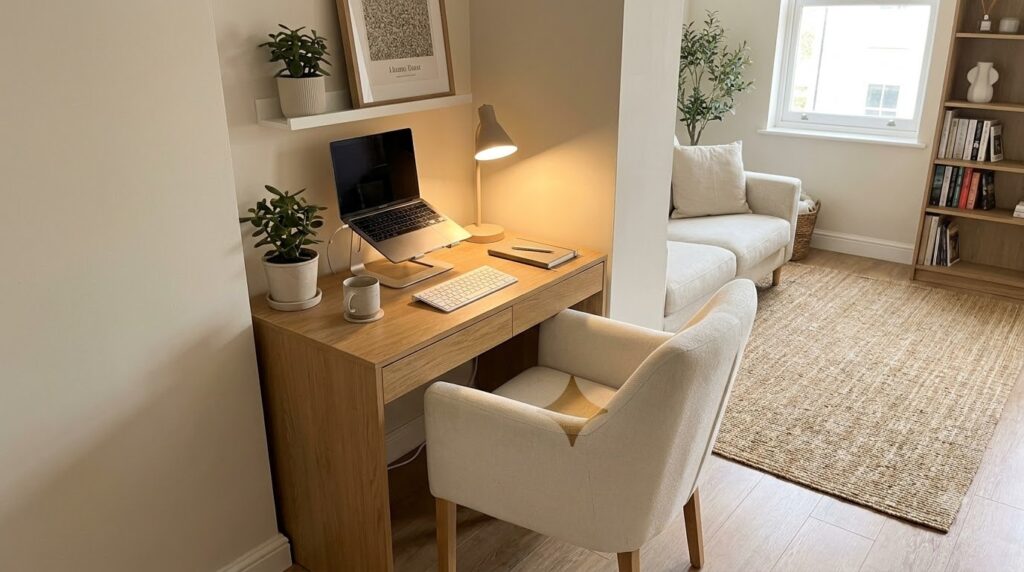
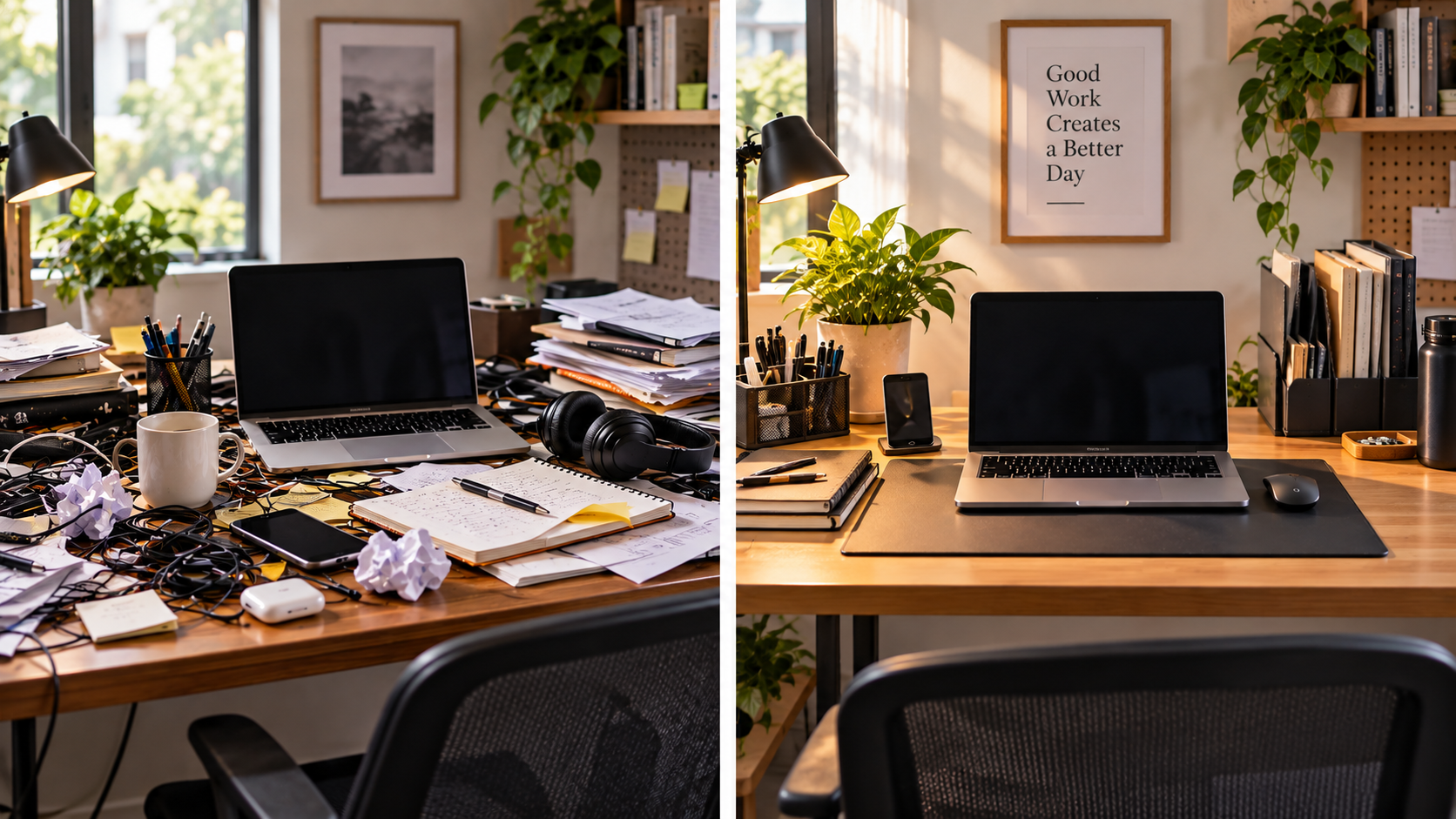
13. Keep Your Desk Organized
A small desk gets messy quickly when everything you own ends up within arm’s reach. The easiest way to keep it under control is to give frequently used items a specific place.
Keep only the things you use regularly on the desktop. Move less frequently used supplies into a drawer, shelf, or small storage container.
Try grouping similar items together instead of spreading them across the desk. For example, keep writing supplies in one place and charging accessories in another. This makes the workspace easier to reset at the end of the day.
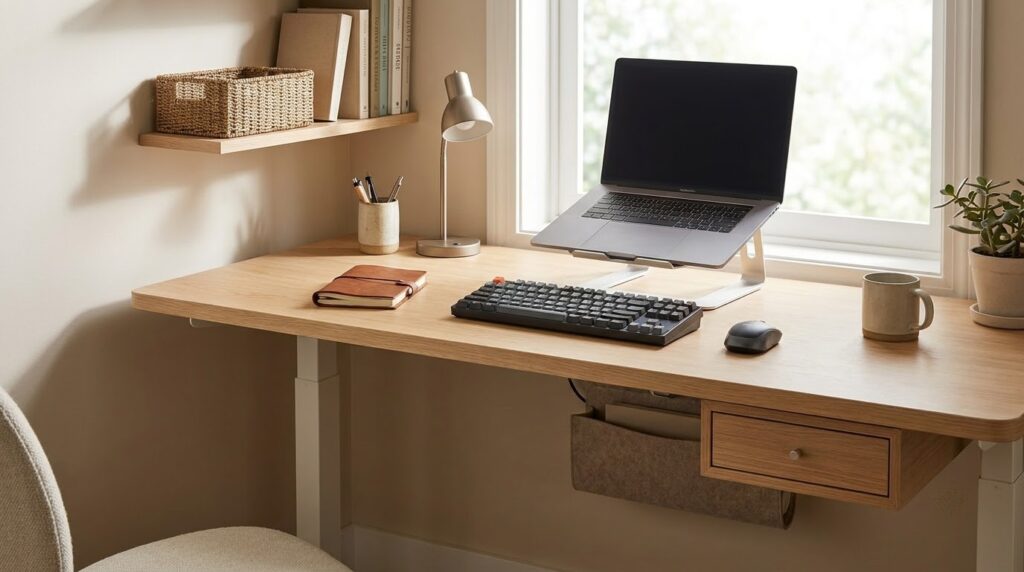
14. Make Small Comfort Upgrades
A small home office doesn’t need expensive upgrades to feel better. Sometimes a few simple changes can make a noticeable difference in how comfortable the space feels throughout the day.
Adjust your monitor so the top of the screen is around eye level, keep your keyboard and mouse at a comfortable height, and make sure your chair allows your feet to rest comfortably on the floor.
You can also add a small footrest, a soft desk mat, or a wrist rest if you find one of them genuinely helpful. The goal isn’t to add more things to your desk—it’s to make the things you already use more comfortable.
15. Add Personality Without Adding Clutter
A small home office doesn’t have to feel plain just because space is limited. A few personal touches can make the space feel more comfortable and motivating without making it feel crowded.
Add one or two things you genuinely enjoy, such as a small plant, a framed print, a favorite book, or a simple piece of decor. Keep the rest of the space relatively clear so these details stand out instead of competing with your workspace.
The key is to decorate with intention. Choose things that make you enjoy spending time at your desk, rather than adding something simply because there is an empty spot.
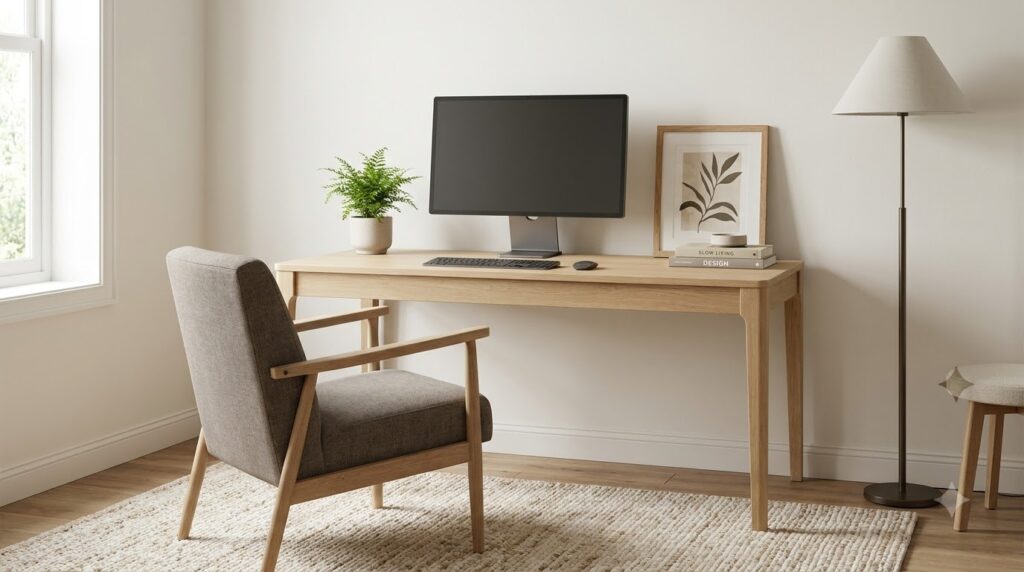
Final Thoughts
A small home office doesn’t need to feel cramped or complicated. The right layout, a few smart space-saving choices, and a little organization can make even a limited area comfortable and practical.
Start with the biggest problem in your space instead of trying to change everything at once. Whether you need more desk space, better storage, cleaner cables, or simply a setup that feels more like your own, one small improvement can make a noticeable difference.
The goal isn’t to create a perfect office. It’s to create a workspace that fits your room, your routine, and the way you actually work.
3 thoughts on “15 Smart Small Home Office Ideas to Maximize Your Space”